Monday, October 27, 2014

Text Structures

In the Pardo article, one section that stood out to me was the section on text structures. The exposure to narrative genres and expository structures help students understand basic story grammar and literary elements.

This brought me back to my middle school creative writing days. Every Friday, my teacher would provide us with a writing prompt-- sometimes it was creative, sometimes it was analytic. But I remember getting excited for this part of the day. I remember on prompt: Write a story about how the dragon saved the princess from the knight.


I think that creative writing opens up a new way of understanding for students. Instead of reading out of a textbook, they are applying their knowledge to create their own little something.

Another idea for teachers is to have the same prompt every week, but have students add on to it. For example, week one can be about setting, week two can be about theme, week three can be about foreshadowing...etc. This is wonderful practice for story-building and can be used as a connector to other narrative stories.


Sunday, October 12, 2014

October 13, 2014

Word Study:

In the The Reading Teacher articles, we saw 3 ways students can learn new words and how each instruction differs from the other.
While wide-reading exposes students to new words via books and pictures, establishment of environment promotes learning outside the lesson or classroom.

So how can we incorporate all strategies to help our students?

With Wide Reading, we can buy books in the library that are either slightly above the average reading level, and/or accurately drawn pictures that make it easy to connect the unknown word to the known image.

With Explicit Instruction, teachers can group unknown words with known words that have some of the same contexts. Instead of using the old word, use the new one.
                   For example: - sheet, blanket, comforter
                                         - cat, kitten, feline
Establishment of Environment is more focused on parental guidance. While teachers can promote challenging words, parents can continue it by making it a game. For example. on the way to school a parent can ask their child how many bridges they see. To get a point, the child has to say the word and point to the object.
     -Word lists from teachers can help with this.


Monday, October 6, 2014

Poetry Performance- Fluency

Performing poetry can be used to integrate reading across the curriculum. Students read with expression, using their voice and gestures to convey the meaning of the text. With repeated readings of a poem, students become fluent readers and increase their comprehension.

October 6. 2014

Fluency is one of the major goals in reading instruction. The speed, accuracy, and expression are representatives of a students level of fluency.

In ch. 4 of Classrooms that Work, the author discusses how reading repetition will help develop a students level of fluency.

I suggest that you discover the exact level the student is on, and find a series of books that will work.

For example, if a student has a low frequency level, "Little Bear" by Else Minarick or "Franklin" by Paulette Bourgeois. 


A more challenging series, is the Magic Tree House books. This series is both educational, fantasy, and sci-fi so it reaches a broad audience.


Once a student has exceeded fluency but still wants a challenge, in terms of pronunciation, the Harry Potter series is an excellent choice.


In conclusion, these books work well for progression because they use repetitious names and sequences that help the reader develop a strong reading fluency.


What series books do you remember reading over and over again?

Sunday, September 28, 2014

Teaching Phonics and Spelling:

In ch.5, the book discusses how students have more words in their listening/meaning vocabulary than in their sight-reading vocabulary.

It also discusses certain lesson formats for students to learn and pay attention to patterns in words.
-Guess The Covered Word
-Using Words You Know
-Making Words

However, which format is appropriate in terms of grade and skill level?


In my opinion 'Guess The Covered Word' is for the early elementary grades. This game allows students to guess and introduces them to not only focus on the word, but also on the meaning. It also leaves room for students to grow--once they know certain words, they can practice on harder word sounds.


'Using Words You Know' is intended for middle elementary age because they use the words they already know. The purpose is to decode unknown words by using the patterns of words they do know, but it still leaves room for new knowledge and improvement.


'Making Words' is for the higher elementary grades. Guided discovery leaves students to grow on their learning independence.  They use the skills they have already obtained and apply them to this format. Students use the sorted rhyming words to spell some new words with the same rhyming pattern.

Monday, September 22, 2014

Supporting Phonemic Awareness

In the article by Yopp & Yopp, phonemic awareness is a somewhat misunderstood concept. Many people confuse the term phonemic with auditory discrimination.


Phonemic awareness: awareness tat the speech stream consists of a sequence of sounds.

So now the question remains, how do you translate this difference into the classroom?


1. Create/ Incorporate activities that are child appropriate:
- songs, chants, word sound games, storytelling, rhymes and riddles
- create posters that focus on a holiday or theme.


"I Have, Who Has" is a game that will help reinforce the ability to identify phonemes in a word. Students love to play this game and are excited when it is used in small and/or whole group settings. This game is a "chain reaction" activity for the kids, with this set focusing on segmenting two, three, and four phoneme words.


 Now this woman, I feel, is a little obnoxious but her game does well with both letters and the sounds they make. According to Yopp & Yopp, a game needs to be playful, engaging, delilberate, and purposeful. I think that this game could even be broadened as the lesson continues and the students learn more. Maybe have bean bags with prefixes and affixes to work on those tricky pronunciations.


All in all, the understanding of what phonemic awareness is will help students progress into metalinguistic awareness and alphabetic orthography.
Did you find her game stimulating? Was it too focused on smaller classrooms?
Feel free to comment below.


Monday, September 15, 2014

9/15/2014

Building Literacy Foundation:

     In chapter 3, we learn about the benefits of pretend reading and how memorization is sometimes a good thing. It also dug deeper into the concepts of forming a foundation for literacy.
     What I really found interesting was the activities that educators can create to promote a foundation for learning.
            Reading to Children:
Reading to children creates a relaxed and soothing environment. When I was in elementary school, after lunch we would all sit in a circle on a rug and listen to my teacher read The Watsons Go to Birmingham or  a Judy Blume book. I believe that the excitement over a story draws on a child's independence thus, having them reciprocate their teacher.
            Independent Reading Time:
Independent reading time can be considered as a form of positive reinforcement. For example, when I was little, if I finished my test or in-class work early I got to read for the rest of the designated time. It gives students a chance to practice reading, build independence, and have a some self confidence aka being proud of their hard work.
            Supporting and Encouraging Writing:
What I learned at A.L. Lotts was that students hate writing almost as much as they hate reading. To change all of that, I believe teachers need to create a more relatable and creative prompt or project. A student has the opportunity to express their imagination and also practice on correct spelling/grammar. Two birds, one stone.

Jones Family Culture:

In this article, researchers observed The Jones Family. The purpose, as stated in the introduction, was to see how families value literacy and what legacies families hold with literacy,
What I found interesting was that The Jones did not have nuclear family roles. Kiki's aunt and grandmother had just as much to teach her as her own mother would. According to Gadsen "Extendedness is important in African American Families".
Intergenerationality shows how the importance and use of literacy differs in each generation. Writing letters, nowadays, is almost obsolete because of technology. Recipes once told orally are now written down and stored in a computer.
Students can learn from Intergenerationality through the means of reading books that focus on a different culture. By furthering discussion on the differences and similarities in culture and literacy use, students can analyze the reasons why literacy is so important.


Upon further thinking...

        I wanted to find books, besides The Patchwork Quilt, that would offer cultural enrichment and excitement in the classroom.

#1. Chicken Sunday by Patricia Polacco

"After being initiated into a neighbor's family in a solemn backyard ceremony, a young Russian-American girl and her African-American "brothers" determine to buy their "gramma" Eula a beautiful Easter hat. But their good intentions are misunderstood, until they discover just the right way to pay for the hat that Eula has her eye on."
--> This book deals with cultural diversity in community as well as family.


#2 Esperenza Rising By Pam Munoz Riyan
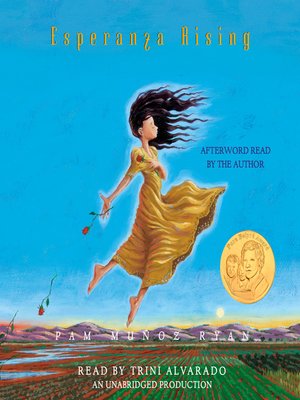

"Esperanza thought she'd always live with her family on their ranch in Mexico--she'd always have fancy dresses, a beautiful home, and servants. But a sudden tragedy forces Esperanza and Mama to flee to California during the Great Depression, and to settle in a camp for Mexican farm workers. Esperanza isn't ready for the hard labor, financial struggles, or lack of acceptance she now faces. When their new life is threatened, Esperanza must find a way to rise above her difficult circumstances--Mama's life, and her own, depend on it."
--> I have a feeling the girls in the classroom will like this more than the guys. But it's a good story about the cultural and socioeconomic changes during the Great Depression and how this event wasn't restricted to just America.

#3. Molly's Pilgrim By Barbara Cohen


"Molly and her parents are a Jewish family who have emigrated from Russia to the United States to escape religious persecution. Molly is the only Jewish child in third grade.
When Thanksgiving arrives, the teacher assigns a project to make a Pilgrim doll. Molly is embarrassed by her mother's attempts to help with her Thanksgiving project. She makes a pilgrim doll — but dresses it in Russian clothing. Soon, however, Molly learns that it takes all kinds of "pilgrims" to make a Thanksgiving."
--> Perfect around October/November. This book is more for the upper elementary levels (3rd-5th grade). This is a good book about community acceptance and unity. I also get a sense of anti-bullying.


You can find more culture diverse books here: http://www.scholastic.com/teachers/lesson-plan/books-teaching-about-cultural-diversity